
Pfizer Bacteriostatic Water Guide
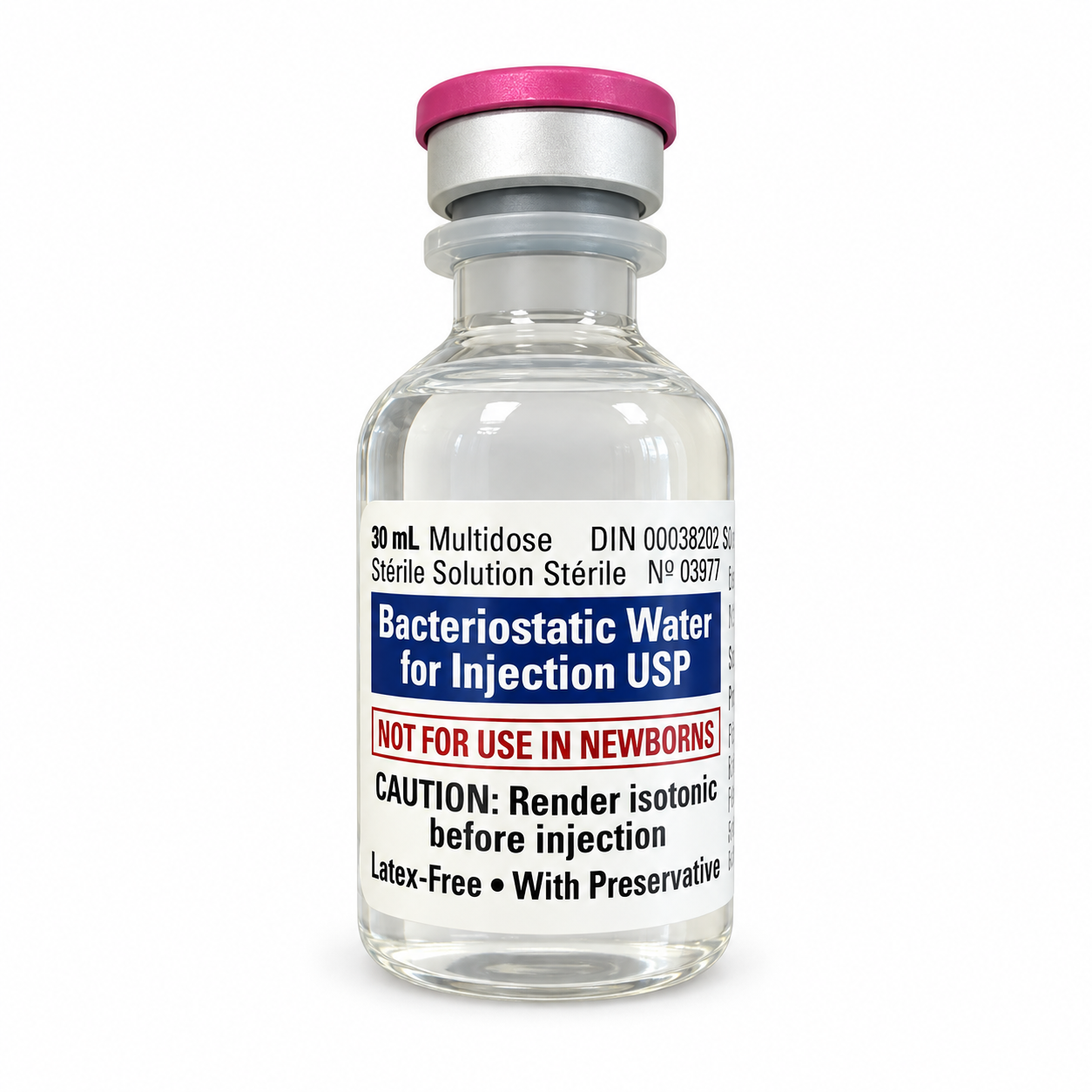
For laboratory research use only. Not for human or veterinary use.
Bacteriostatic water, often called BAC water, is one of the most commonly discussed diluents in research peptide workflows. Because it is used around sensitive materials, researchers should understand exactly what it is, how it differs from other sterile diluents, and why product labeling matters.
What is Pfizer Bacteriostatic Water?
Pfizer describes Bacteriostatic Water for Injection, USP as a sterile, nonpyrogenic preparation of water for injection that contains benzyl alcohol as a bacteriostatic preservative. Depending on the format, Pfizer lists benzyl alcohol at 0.9% (9 mg/mL) or 1.1% (11 mg/mL).
The key difference between bacteriostatic water and plain sterile water is the preservative. Benzyl alcohol is included to help inhibit bacterial growth after a multiple-dose container is entered. It does not replace proper handling, sterile technique, or product-specific instructions.
Why benzyl alcohol matters
Benzyl alcohol is the ingredient that makes bacteriostatic water different from preservative-free sterile water. For research buyers, the most important takeaway is simple: always read the label and confirm the diluent matches the intended laboratory workflow.
Pfizer also notes important warnings around benzyl alcohol-containing preparations, including that solutions containing benzyl alcohol must not be used in neonates. This article is not medical advice and does not provide injection, dosing, or treatment instructions.
Bacteriostatic water vs sterile water
Both products may look similar in a vial, but they are not the same. Sterile water generally does not include a bacteriostatic preservative. Bacteriostatic water includes benzyl alcohol and is supplied for repeated withdrawals from a multiple-dose container when used according to the product labeling.
Researchers should avoid assuming that any clear vial of water is interchangeable. The label should identify whether the product is bacteriostatic water, sterile water, sodium chloride, or another diluent.
What to check before buying or using a diluent
- Label name: Confirm it says Bacteriostatic Water for Injection, USP if that is the required material.
- Preservative: Check whether benzyl alcohol is listed and at what concentration.
- Container integrity: Do not use a product if the seal is damaged or the solution is not clear.
- Storage instructions: Follow the manufacturer’s labeled storage range.
- Documentation: Keep batch, lot, and supplier details for recordkeeping.
Storage and handling basics
Pfizer’s product information lists controlled room temperature storage for Bacteriostatic Water for Injection, USP. Researchers should always follow the exact storage instructions on the product label and avoid using any diluent that appears cloudy, discolored, opened unexpectedly, or otherwise compromised.
Good documentation matters. For a professional research workflow, keep product labels, lot numbers, order records, and any supplier documentation together so materials can be traced later if needed.
Final takeaway
Pfizer Bacteriostatic Water is not simply “water.” It is a sterile preparation that includes benzyl alcohol as a preservative and comes with specific labeling, warnings, and handling expectations. For research settings, the safest approach is to verify the label, confirm compatibility with the intended workflow, and follow the manufacturer’s instructions for every material involved.
Research-use notice: This article is for educational catalog information only. Products and information on this website are not intended to diagnose, treat, cure, or prevent disease.